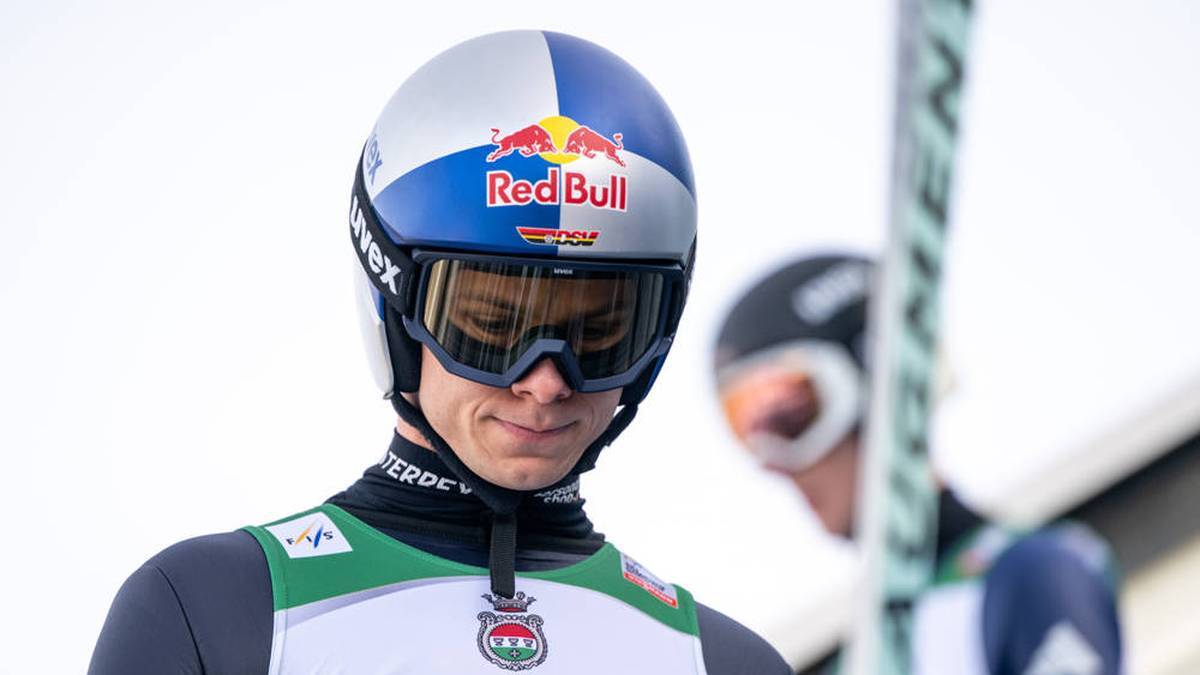
Especially thanks to Felix Hoffmann, the Four Hills Tournament has been going well for the German team so far. The 28-year-old is currently in fifth place and still has a chance for a podium finish before the final jump on Tuesday.
“He first had to get used to the hustle and bustle, but now he’s mastering it with flying colors,” said former Tour winner and current ARD ski jumping expert Sven Hannawald in an interview with SPORT1 .
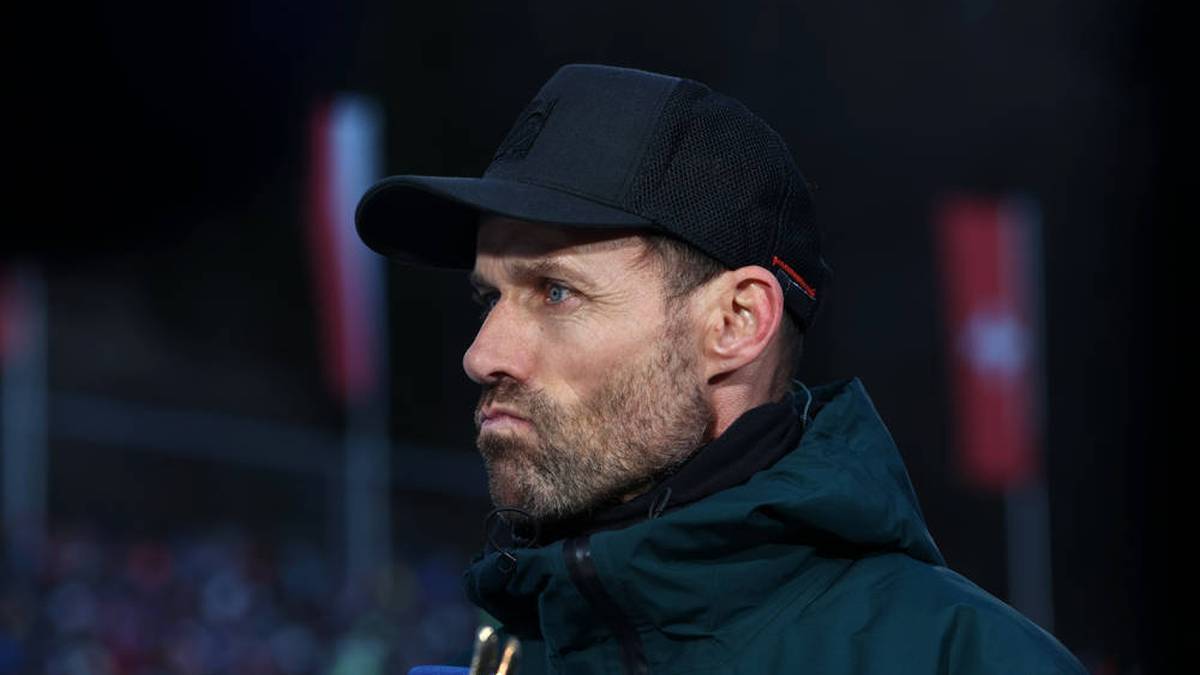
Sven Hannawald sees problems in German ski jumping
Philipp Raimund has also shown a solid tournament so far, but recently slipped to seventh place and has little chance of a podium finish.
However, the other German ski jumpers are currently all in a crisis. Pius Paschke is still looking for his form from the previous season, when he finished fifth in the overall World Cup, but is at least in 23rd place in the overall standings.
The situation is bleak, however, for former flagships Andreas Wellinger and Karl Geiger, who have not yet reached the second round even once.
Four Hills Tournament: What’s going wrong for Wellinger and Geiger
This development also hurts Sven Hannawald, as he explained in an interview with SPORT1 : “It really hurts my soul because they are a bit the victims of what has happened now with the suits and so on.”
“They now have to reinvent their jump. It worked with more fabric, but now it doesn’t work 0.0 with less fabric,” Hannawald named the reasons for their problems: “You see that both are working, that they are trying to adapt and change, but it’s a bigger construction site.”
Meanwhile, the problem for the former German top athletes has also become a real mental issue: “If a person is supposed to erase their memories, then they embark on a difficult path. A jumper still always has memories of what was successful back then.”
“You can install new software on a computer. It doesn’t ask what was before. It just runs, takes the new and says: Okay, attack. That’s the disadvantage of humans, that we always remember the usual movement sequences,” Hannawald further explained.
Andreas Wellinger is still looking for his form
Hannawald firmly believes in German Olympic medals
Despite the problems, he still has a residual hope that the two will find their form through the Olympics. And even if not, the 2002 Olympic champion is optimistic that there will be German medals to celebrate at the upcoming Games in Italy.
“In this case, it’s good that there is no longer a team jump with four jumpers at the Olympics, but instead the mixed team ( Editor’s note: team jump with two men and two women ) and the super team competition ( Editor’s note: team jump with two jumpers ) will take place,” said Hannawald.
“The positive thing is that we have our two guys who fit in with the two girls,” Hannawald believes and shows optimism: “And that reassures me for now regarding a medal for Germany.”
Overall, he is “glad” that the German team is “no longer so dependent on Wellinger and Geiger.” If Hoffmann and Raimund weren’t suddenly so strong this winter, “we would quickly be in a crisis.”
Ski jumping: DSV has a youth problem
Despite the strong performances of Hoffmann and Raimund, the currently ongoing Four Hills Tournament still reveals a clear dilemma in German ski jumping: no young jumpers are coming up.
While Austria’s top talent Stephan Embacher (19) is suddenly in third place in the Tour standings, Germany is lucky that two jumpers who have long been in the World Cup have finally improved this season.
“That’s a bit of the small tear in Germany, where you also see that there is one or the other talent whose path then stops for some reason as soon as they reach the first team,” said Hannawald in an interview with SPORT1 .
DSV Sports Director Horst Hüttel also struck a similar note, raising the alarm about the current development: “This concerns us enormously, it definitely cannot satisfy us.”
Hannawald views this development with concern: “We have also had junior world champions, but as soon as they take the next step into the first team, they stagnate.”
Hannawald criticizes German youth
The former Tour winner sees the reasons for this lack of development in the jumpers themselves: “It’s not about the coaches around them, but rather about the jumpers as individuals. Are they already satisfied once they’ve made it into the team? Or do they strive for the very, very big successes?”
One reason is certainly the increased pressure. He knows from his own experience that there is “a completely different wind” in the first team. “I was successful in my youth, then didn’t change anything and therefore initially didn’t achieve anything in the men’s category. Then, of course, you also have crises of faith,” Hannawald recalls.
“But you have to deal with that and cope with it,” finds the 2002 Olympic champion: “In the end, you want to prove to yourself that this was certainly not the last stop. So much is being done in Germany, but somewhere it’s stuck.”
This development is then naturally “to the detriment of us Germans,” Hannawald believes. Changes are needed, whether through external help or a changed attitude, so that jumpers with “extreme potential” can then show more of themselves in the World Cup and continue to improve.